43 commas after introductory words
Commas with Introductory Words - The Blue Book of Grammar ... Rule 2 - Use a comma before and after introductory words such as namely, that is, i.e., for example, e.g., or for instance when they are followed by a series of items. Example: You may be required to bring many items, e.g., sleeping bags, pans, and warm clothing. Commas and Introductory Words or Phrases; Comma; Phrase Commas and Introductory Words or Phrases Commas are used to set off certain items that often begin a sentence andhave no grammatical connection with the rest of the sentence. These items include certain common expressions, unemphatic interjections, and direct addresses. Common Expression:But of course, we have mustard in the car.
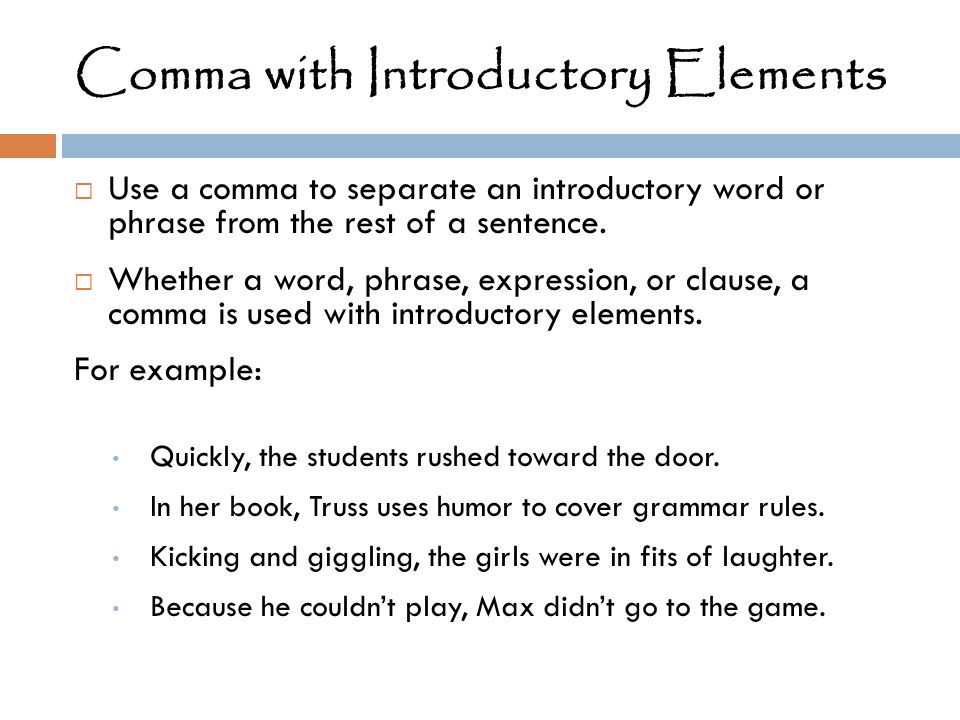
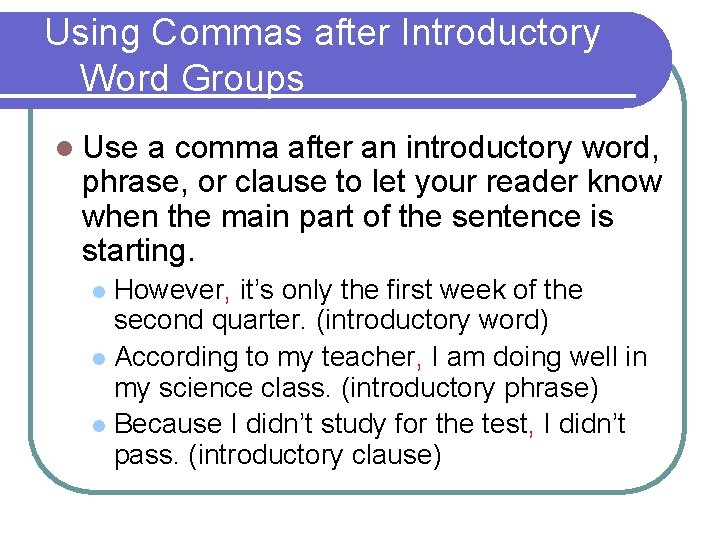
Commas | Writing Center Use a comma after introductory words (words that introduce [come before] a main clause). Here is an example of a sentence with introductory words: After the dance, they went home. They went home is the main clause. Here is another example of a sentence with introductory words; Because the rain started, she rolled up the windows.

Commas after introductory words
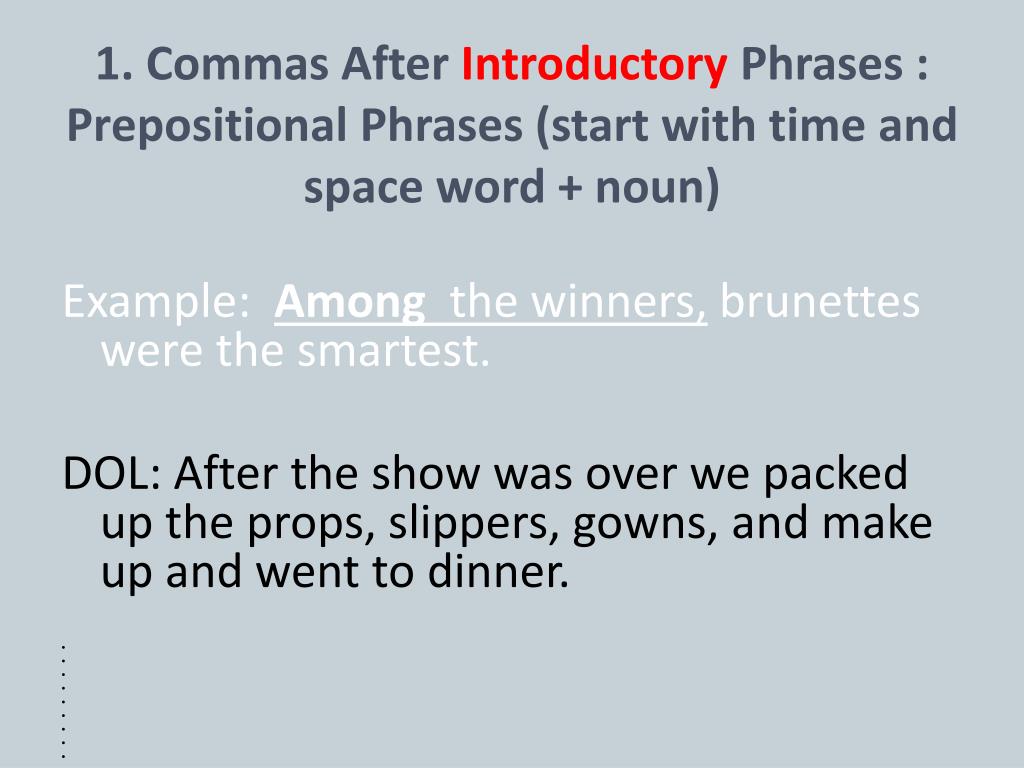
Using Commas to Separate the Introductions Worksheets Introductory phrases are just like introduction clauses and are used in introduction paragraphs mostly, but the only difference between these and the clauses is that they do not make complete sense. However, a comma is used after these too to separate them from the rest of the text. For example, "Upon her insistence, we went out for shopping." Using Introductory Phrases Correctly - YOURDICTIONARY To use it properly, you need to use a comma after the introductory prepositional phrase to set it apart from the rest of the sentence if the phrase is longer than four words. You can see the proper punctuation in these examples: After the severe spring thunderstorm, the sky turned gold. In the very beginning of the story, a boy meets a stray dog. Commas After Introductory Words Worksheets - K12 Workbook Displaying all worksheets related to - Commas After Introductory Words. Worksheets are Comma packet, Commas after introductory phrases and clauses work, Comma exercises, Commas notes work, Introductory elements and commas work, Writing using commas, Introductory words work, Commas 101 the basics.
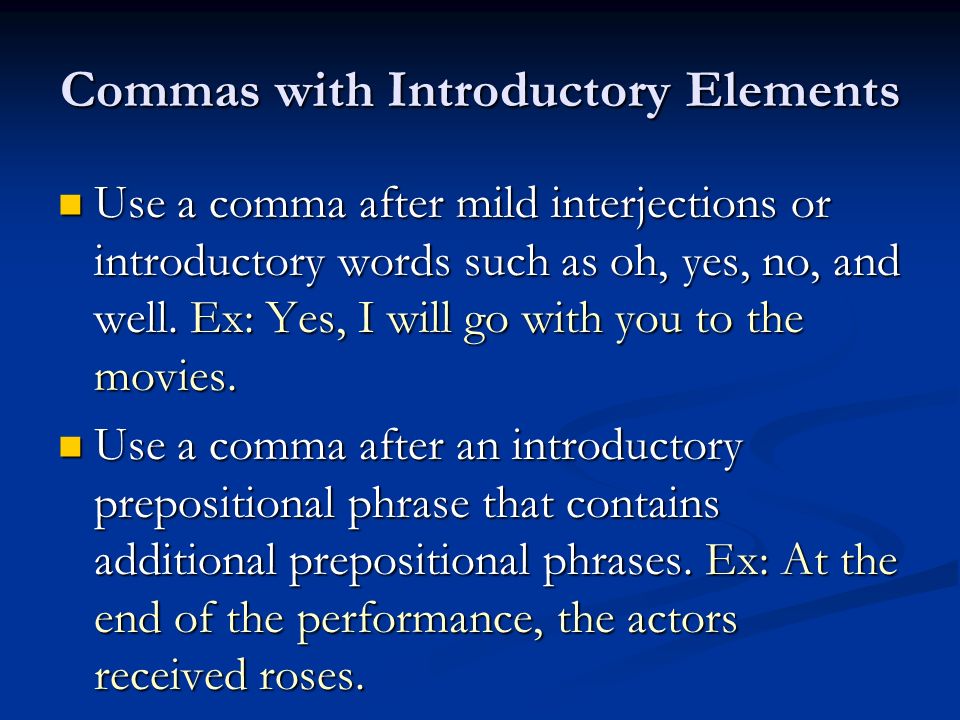
Commas after introductory words. After Introductory Words | Writing Center Use a comma after introductory words (words that introduce [come before] a main clause). Here is an example of a sentence with introductory words: After the dance, they went home. They went home is the main clause. Here is another example of a sentence with introductory words; Because the rain started, she rolled up the windows. Commas and Introductory Words - Cathleen Townsend Introductory adverbs need to be set off from the rest of the sentence with commas, UNLESS they are part of a part of a phrase, in which case the entire phrase gets a comma. Common examples are however, meanwhile, suddenly, finally, besides, and still. These are often used as transition words, to link one sentence to the next. Extended Rules for Commas // Purdue Writing Lab Common starter words for introductory clauses that should be followed by a comma include after, although, as, because, if, since, when, while. While I was eating, the cat scratched at the door. Because her alarm clock was broken, she was late for class. If you are ill, you ought to see a doctor. Should You Put a Comma after Introductory Words Such As ... If you have an introductory word (or two) that is being used as an adverb (usually answers the question of when, where, why, or to what degree), then no comma. If it's being used as a discourse marker, then go ahead and use a comma. Here are a couple of examples: "Someday, I'd like to go on a cruise." — This is incorrect.
With Introductory Phrases - Excelsior College OWL Use commas after introductory words or phrases. Subordinating conjunctions are words that connect, but unlike coordinating conjunctions, which connect equal parts, subordinating conjunctions connect dependent clauses (incomplete thoughts) to independent clauses.When you see a subordinating conjunction at the beginning of a sentence, this signals an introductory phrase, and you know a comma is ... Commas After Introductory Words - Grammarly Grammar Introductory words, like introductory phrases, require a comma. After introductory words, we use a comma to separate the introductory word from the independent clause. Here's a tip: Commas can be tricky, but they don't have to trip you up. Commas with Introductory Elements - English Grammar 101 Introductory Adverb Prepositional Phrases. Use a comma after an introductory adverb prepositional phrase unless it is very short (3-4 words) and is not likely to be misunderstood. Between the towering city buildings, the sky could be seen. Use a comma because the introductory prepositional phrase is more than four words. The Grammar Guru: Commas after introductory elements ... Grammar Guru Tip #30. Introductory elements consist of clauses, phrases and words that appear before the main clause of the sentence. Essentially, they prepare your readers for what the sentence is really about, or the meat of the sentence. Introductory clauses and phrases that require an offsetting comma include prepositional phrases and ...
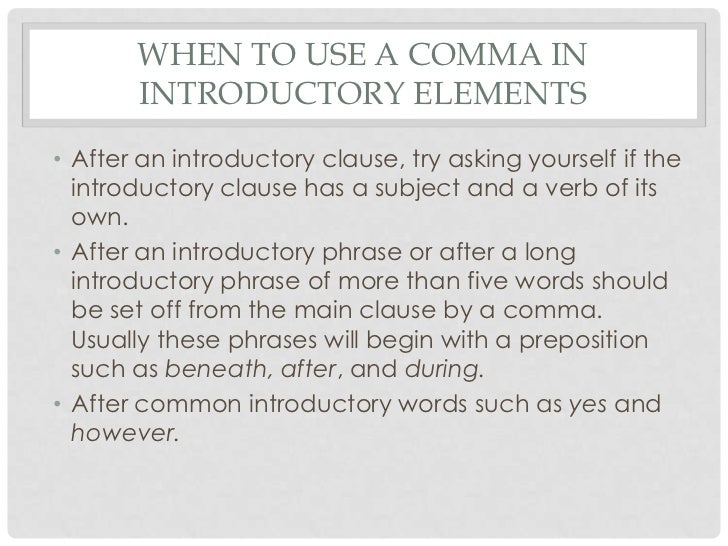
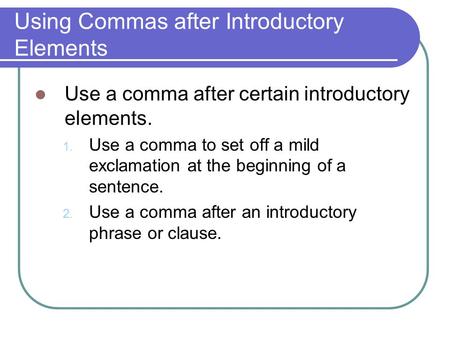
Comma After Introductory Phrases An introductory adverbial phrase is often set off by a comma but need not be unless misreading is likely. Shorter adverbial phrases are less likely to merit a comma than longer ones. The Purdue Owl also advises that the comma after some introductory elements, such as "a brief prepositional phrase," may be left out. PPT PowerPoint Presentation - The Comma Use commas after introductory a) clauses, b) phrases, or c) words that come before the main clause. You can recognize introductory phrases by Common starter words such as, after, although, as, because, if, since, when, while. Also, Common introductory words, yes, however, well should be separated by a comma. While I was eating, the doorbell rang. Chicago Style Workout 2: Commas with Introductory Words ... Chicago Style Workout 2: Commas with Introductory Words and Phrases (CMOS 6.35-6.39) Note: These questions are designed to test knowledge of The Chicago Manual of Style. Other style guides may have different rules and guidelines. The first five items are true/false statements, and the last five ask you to judge whether the example does or ... Comma after introductory words, phrases, clauses ... Comma sense—a fun-damental guide to punctuation suggest to use the comma to set off introductory elements, which are reported to be:. an adverb: First, I need to call my girlfriend. a prepositional phrase: After dinner, let's go to see a movie. an appositive: A stumbling giggler, Lumpy was hardly prepared for the relay baton suddenly being thrust upon him.
Browse Printable Commas After an Introductory Phrase ...
Commas After Introductory Phrases - Grammarly There are several types of introductory phrases, including prepositional phrases and appositive phrases. Sometimes a comma is necessary after an introductory phrase. Other times, the comma is optional, and there are also times when a comma should not be used.

Commas 101: The Basics - The Evergreen State College
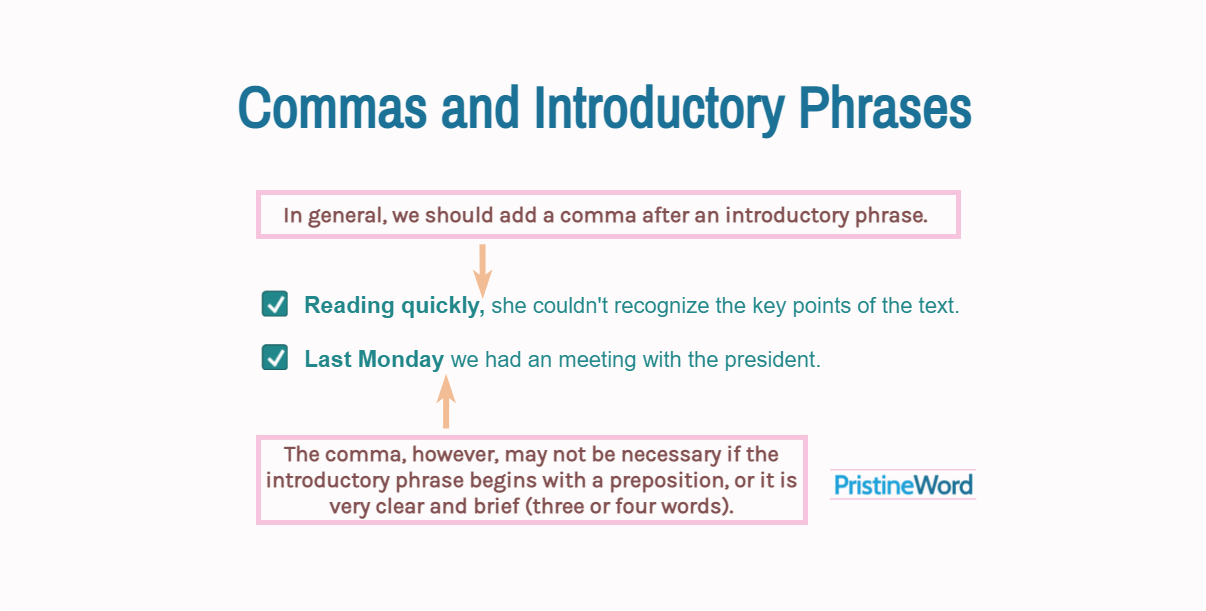
Do You Need a Comma After an Introductory Phrase? October 24, 2021 - 3 min read. PristineWord. Generally, we should add a comma after an introductory phrase. The comma, however, may not be necessary if the introductory phrase begins with a preposition, or it is very clear and brief (no more than three or four words). Generally, we should add a comma after an introductory phrase.

Using commas with introductory words/phrases - YouTube
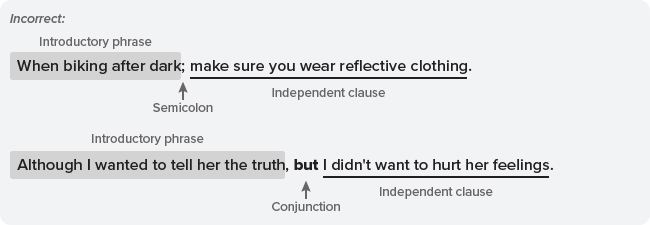
Commas After Introductions // Purdue Writing Lab Introductory elements often require a comma, but not always. Use a comma in the following cases: After an introductory clause. After a long introductory prepositional phrase or more than one introductory prepositional phrase. After introductory verbal phrases, some appositive phrases, or absolute phrases. If there is a distinct pause.
Comma Rule #3: Commas with Introductory Elements - Punctuation
Browse Printable Commas After an Introductory Phrase ... This exercise will give your students practice reading a text, making a prediction, and citing text evidence to support it. They will use introductory phrases as they complete sentence frames to create strong evidence-based sentences. This worksheet uses introductory clauses and introductory words for practice using commas.

When to Use a Comma After 'In this instance', 'In the first ...
Commas after Introductory Words | Grammar Quiz - Quizizz There are 3 kinds of words that we put a comma after if they take place at the beginning of a sentence. answer choices Got it. OK Question 2 30 seconds Q. The first kind of words are MILD INTERJECTIONS. These are words like: um, yes, hi, no, ok, ah, well, so. What do these words do? answer choices They show a mild emotion. They make a noise.
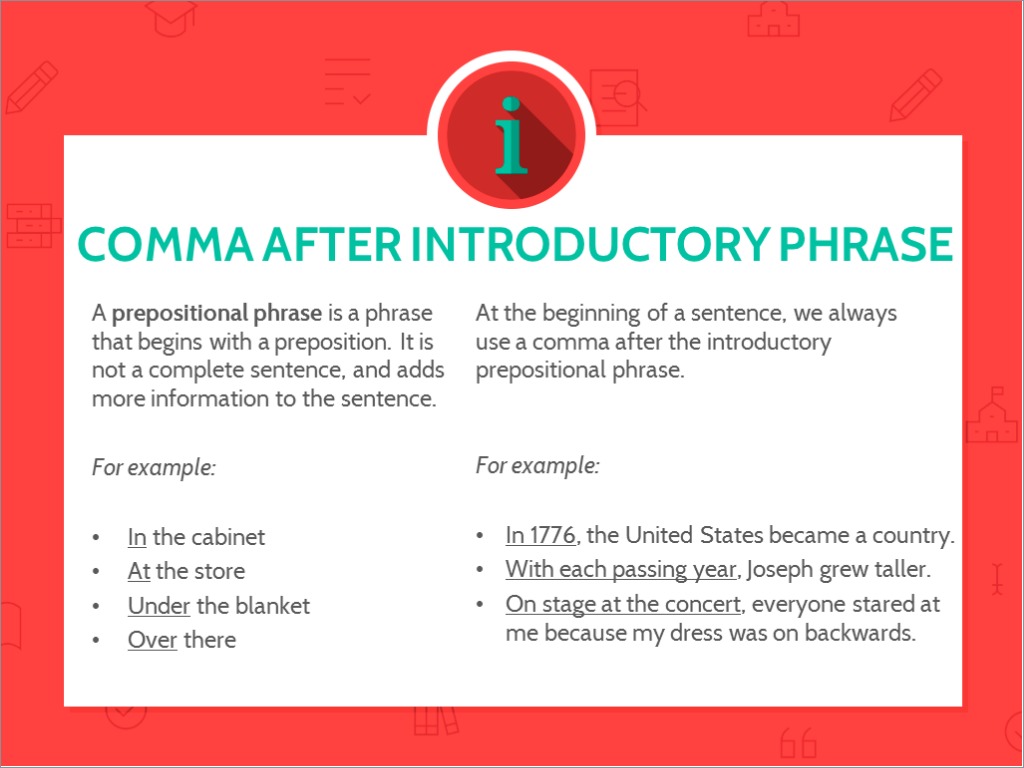
Nearpod
Commas: After Introductory Words or Phrases - YouTube Using commas after introductory worlds or phrases.

Introductory Commas, Free PDF Download - Learn Bright
Do I Put a Comma After But? - BartlesVilleSchools Use commas after introductory a clauses, b phrases, or c words that come before the main clause. Do you put a comma before or after a transition word? After transition words and phrases that begin a sentence, use a comma: although, thus, on the other hand, for example, and so on. In the midst of a sentence, use a pair of commas to separate ...

Should You Put a Comma after Introductory Words Such As Now ...
Introductory elements worksheets - K5 Learning Introductory elements are clauses, phrases or words placed at the beginning of a sentence, prior to the main clause. In these worksheets, students identify introductory elements and set them off from the rest of the sentence with a comma. Worksheet #1 Worksheet #2 Worksheet #3 Similar: Introductory words worksheets Writing introductory phrases

Browse Printable Commas After an Introductory Phrase ...
Introductory words worksheets - K5 Learning Introductory words Set off introductory words with a comma Introductory words at the start of a sentence ( meanwhile, generally, first, finally, yes, no, well .....) are set off from the rest of the sentence by a comma. Students are asked to properly punctuate sentences which begin with introductory words. Worksheet #1 Worksheet #2 Worksheet #3
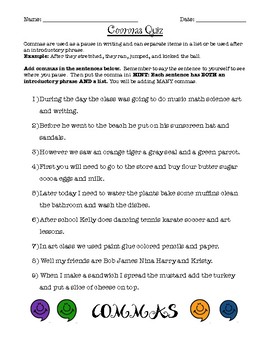
Commas Quiz (In Introductory Phrases and Lists/Series)
Punctuation Tips: Commas After Introductory Phrases - Proofed You can often use a comma to separate an introductory element from the rest of a sentence. Key cases where you'll want to do this include: After longer introductory phrases (e.g., four words or more). To imply a pause or prevent confusion. When a sentence starts with a dependent clause. When using a single adverb to frame a whole sentence.

130 Educational Activities ideas | educational activities ...
Commas After Introductory Words Worksheets - K12 Workbook Displaying all worksheets related to - Commas After Introductory Words. Worksheets are Comma packet, Commas after introductory phrases and clauses work, Comma exercises, Commas notes work, Introductory elements and commas work, Writing using commas, Introductory words work, Commas 101 the basics.
![12.28.15] Introductory Phrases and Commas :: Purdue Writing ...](https://i.pinimg.com/originals/e5/f9/91/e5f99139164117a91bba1f57f13d821d.jpg)
12.28.15] Introductory Phrases and Commas :: Purdue Writing ...
Using Introductory Phrases Correctly - YOURDICTIONARY To use it properly, you need to use a comma after the introductory prepositional phrase to set it apart from the rest of the sentence if the phrase is longer than four words. You can see the proper punctuation in these examples: After the severe spring thunderstorm, the sky turned gold. In the very beginning of the story, a boy meets a stray dog.

Punctuation Tips: Commas After Introductory Phrases | Proofed
Using Commas to Separate the Introductions Worksheets Introductory phrases are just like introduction clauses and are used in introduction paragraphs mostly, but the only difference between these and the clauses is that they do not make complete sense. However, a comma is used after these too to separate them from the rest of the text. For example, "Upon her insistence, we went out for shopping."
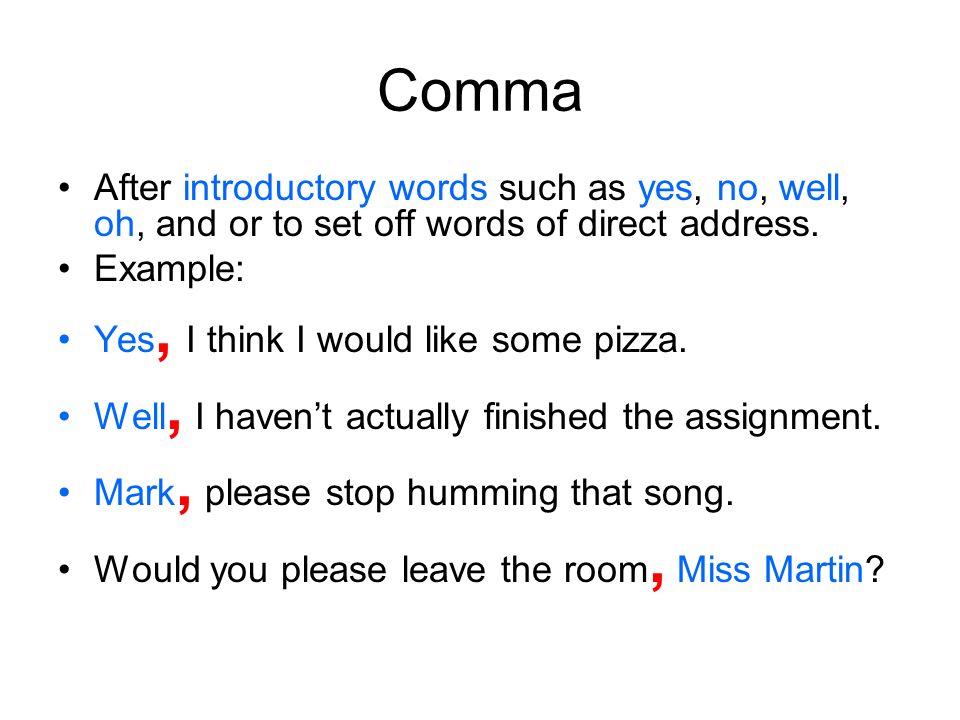
THE COMMA. COMMA TRAUMA! Use commas: To separate three or ...
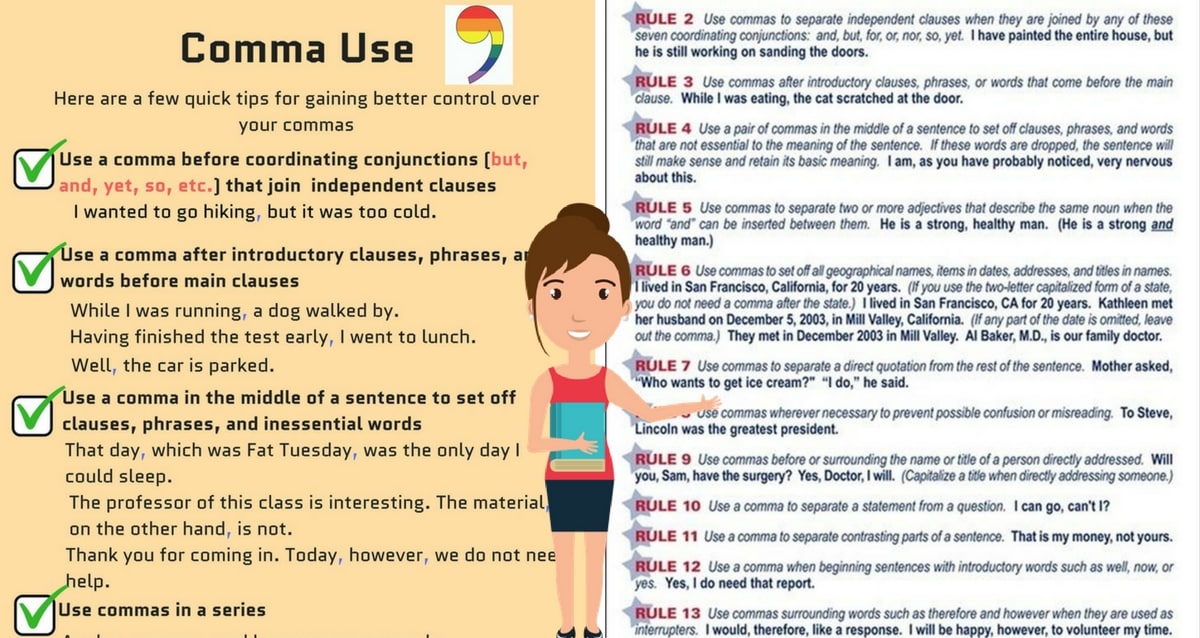
Comma Rules: 8 Rules for Using Commas Correctly! - ESLBuzz ...

Commas and introductory elements (video) | Khan Academy
Commas after introductory material
Commas - Mrs. Lorber's5th GradeELA Site
Comma Usage 11 English Grammar Review. Commas with ...
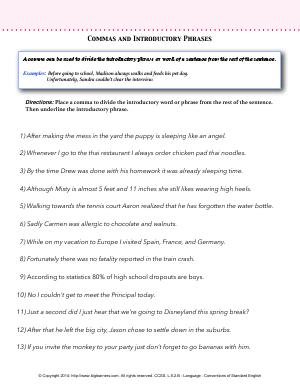
Biglearners Worksheet | Biglearners
PPT - Commas PowerPoint Presentation, free download - ID:2359870
Unit 7.commas after introductory words. lesson

Commas: Direct addresses, Introductory words, Interjections, and Interrupters

Commas After Introductory Element Exit Ticket

Using a Comma After an Introductory Element
Comma Basics Lesson 1 Commas after introductory elements ...
Commas after Introductory Information on the SAT® and ACT ...
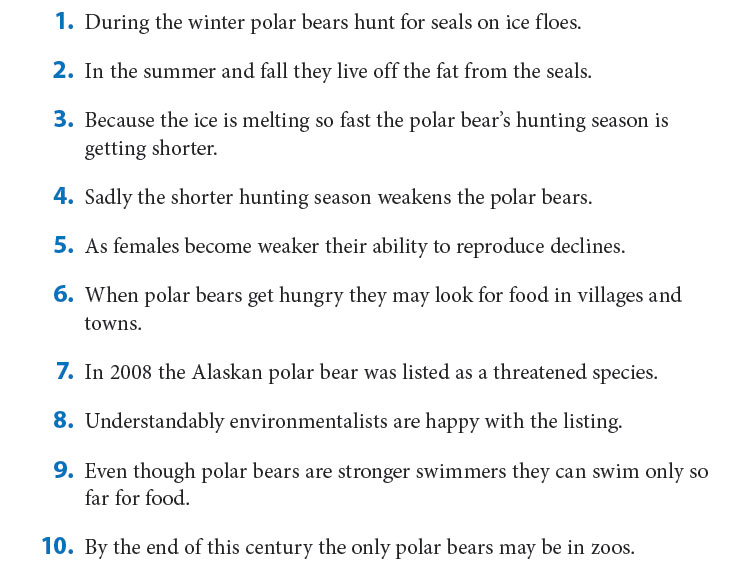
Editing and Publishing Opinion Essays | Thoughtful Learning K-12
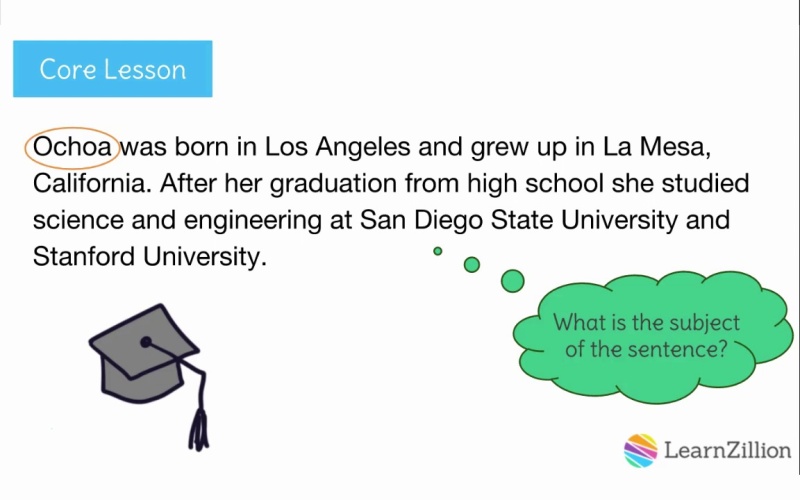
Video for Commas After Introductory Phrases
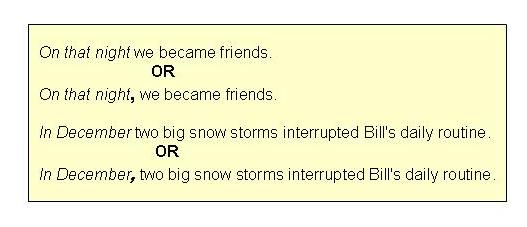
COMMA

Commas When Using 'In contrast' or 'By Contrast'
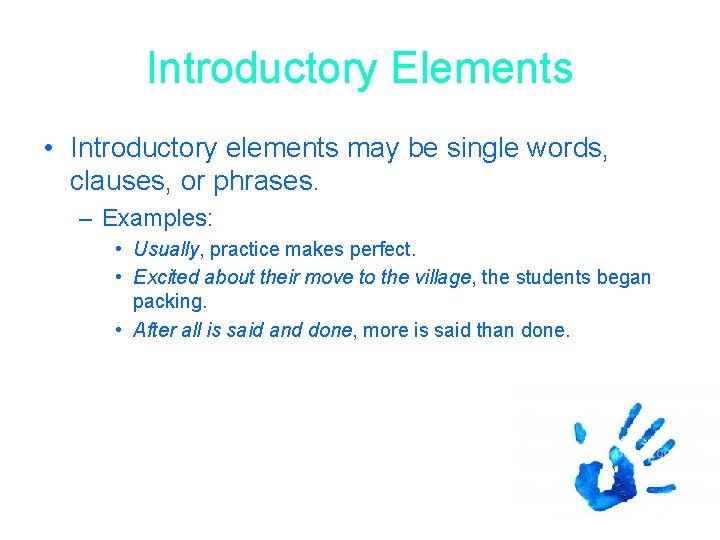
Commas with Introductory Elements MINILESSON 37 From the
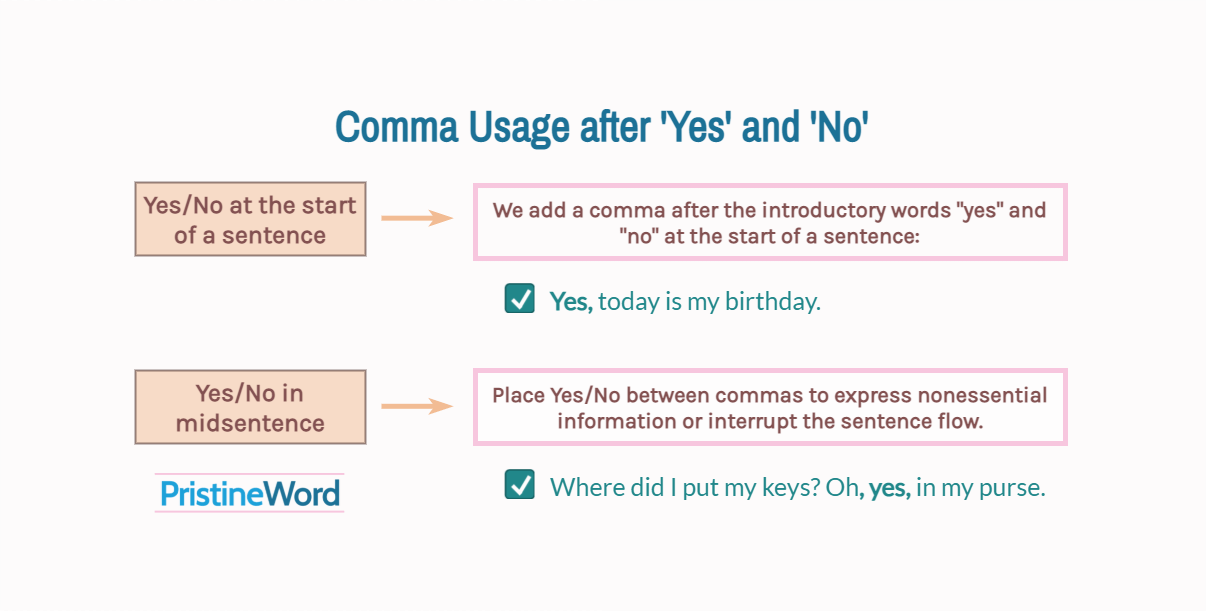
Should You Add a Comma After 'Yes' and 'No'?

Free FUN Commas with Introductory Phrases Worksheet ...
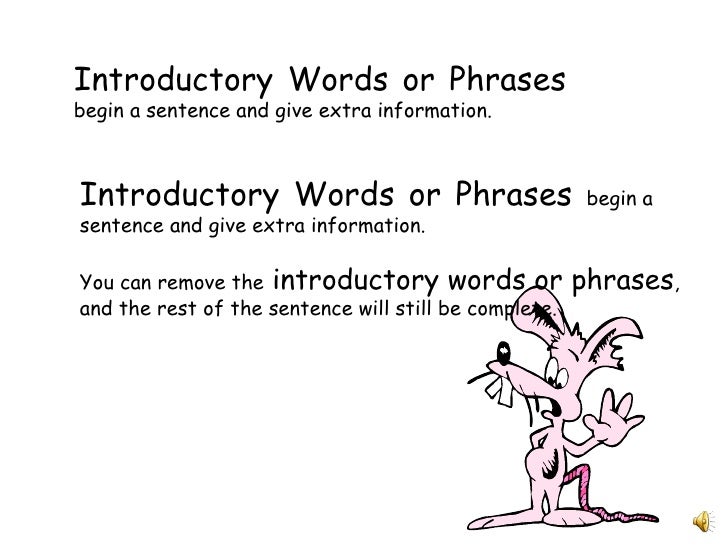
Unit 7 Commas After Introductory Words Lesson
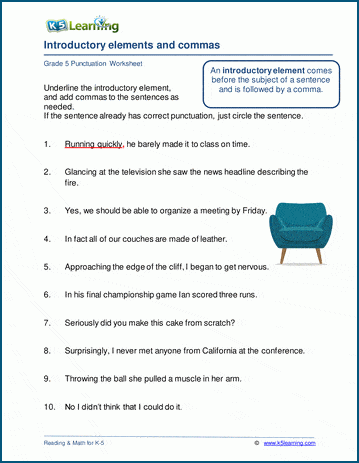
Introductory elements worksheets | K5 Learning
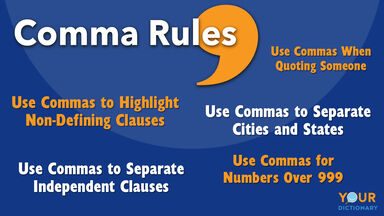
Comma Rules: Essentials for Everyday Writing
Do You Need a Comma After an Introductory Phrase?

Worksheet: Commas - with introductory words | abcteach
When to Use Commas After 'When in doubt', 'In case of doubt ...

6 Ways to Use Commas - wikiHow
Using Commas after Introductory Elements l Use a
Fifth Grade Grammar: Commas and Introductory Elements
0 Response to "43 commas after introductory words"
Post a Comment